Simple storage ideas, practical solutions and inspiration for creating a pantry that is easier to use and easier to keep organized.
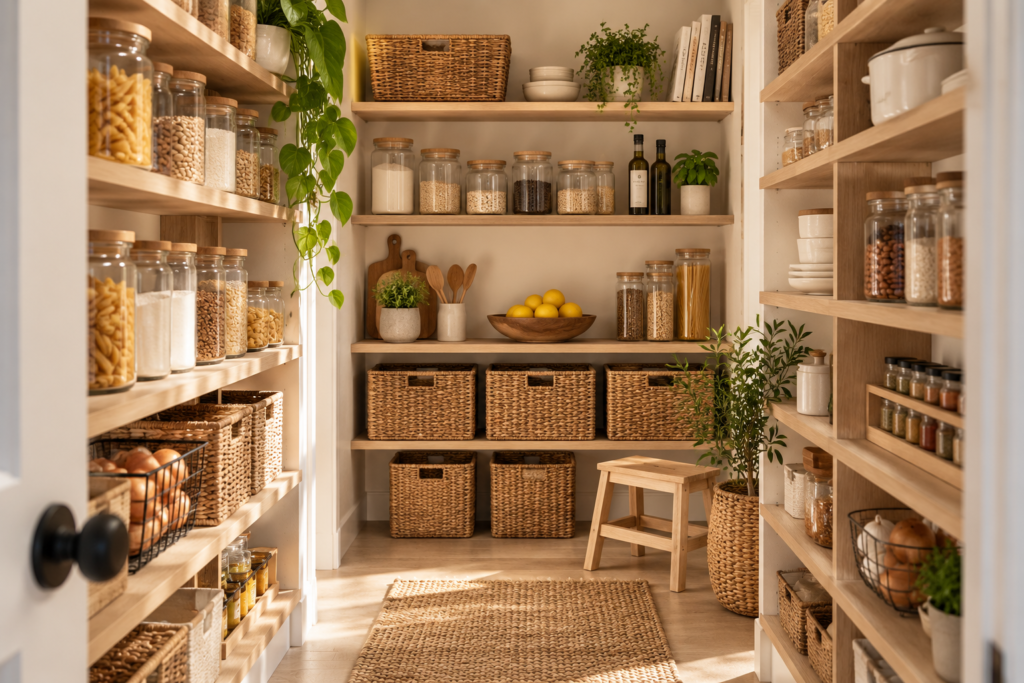
Simple Pantry Organization Ideas
A well-organized pantry makes everyday life easier. From clear containers and baskets to smarter shelf layouts, small changes can make a big difference. Explore simple pantry organization ideas designed to create a calmer, more functional space.
Before You Buy Pantry Storage
- Choose one shelf or category to finish first.
- Measure the usable width, height and depth, including the door opening.
- Group duplicates and check the storage guidance on packaging.
- Test a simple layout with the containers you already have.
If your pantry is a narrow cupboard, our small pantry guide focuses on the space and access problems that matter most.
1. Use Clear Containers for Everyday Staples
Clear containers make it easier to see what you have, reduce forgotten food and keep frequently used ingredients within easy reach. Use them for dry goods such as pasta, rice, oats and flour, and group similar items together on the same shelf.
Choose a food-suitable container that fits the quantity you normally buy. Keep identification, instructions and relevant dates from the original packaging, and avoid repeatedly topping up a container without checking what remains.
Recommended Pantry Containers
Product Name
A practical storage solution for keeping everyday pantry staples organized and easy to access.
2. Create Simple Pantry Zones
Group similar items together so everything has a natural place. Keep breakfast foods in one area, baking ingredients in another and snacks together in an easy-to-reach spot. Simple zones make it easier to find what you need and help prevent the pantry from slowly becoming cluttered again.
Start with three or four broad zones and test them during a normal shopping week. If a category is small, give it part of a shelf rather than an oversized basket.
3. Make Better Use of Deep Shelves
Deep pantry shelves can quickly become difficult to use when smaller items disappear behind larger ones. Use baskets, bins or pull-out organizers to group similar products together and make the full depth of each shelf accessible.
Measure the cupboard opening as well as the shelf itself. Keep each bin light enough to move comfortably and check that it can pass the hinges without tilting.
product name
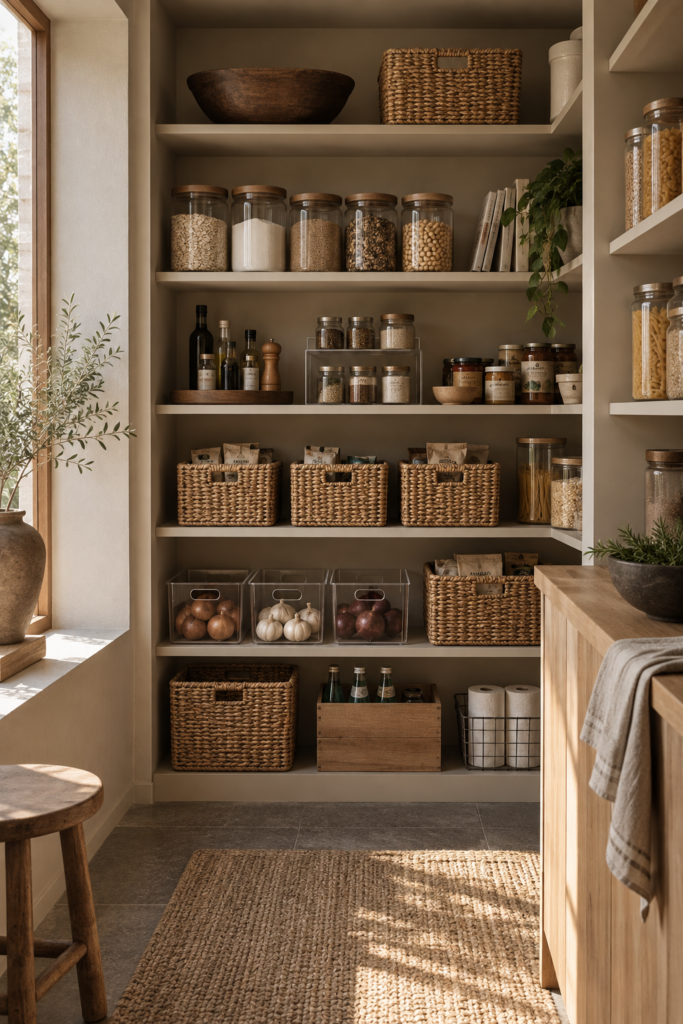
4. Keep Everyday Items Within Easy Reach
The most frequently used pantry items should be the easiest to reach. Keep everyday staples around eye level, while less frequently used ingredients can sit higher or further back. A simple shelf hierarchy makes the pantry faster to use and easier to keep organized.
Store heavy items on stable lower shelves where you can lift them comfortably. Keep the highest positions for lighter, occasional supplies rather than items needed several times a day.
5. Use Baskets to Control Smaller Items
Small packets, snacks and loose pantry items are often what make shelves feel cluttered. Baskets keep these items together while still making them easy to grab. Use separate baskets for categories such as snacks, baking supplies or quick meals to create a simple system that is easy to maintain.
Choose a basket shallow enough to see the contents. If small packets disappear into a second layer, split the category or use a lower container.
Product name
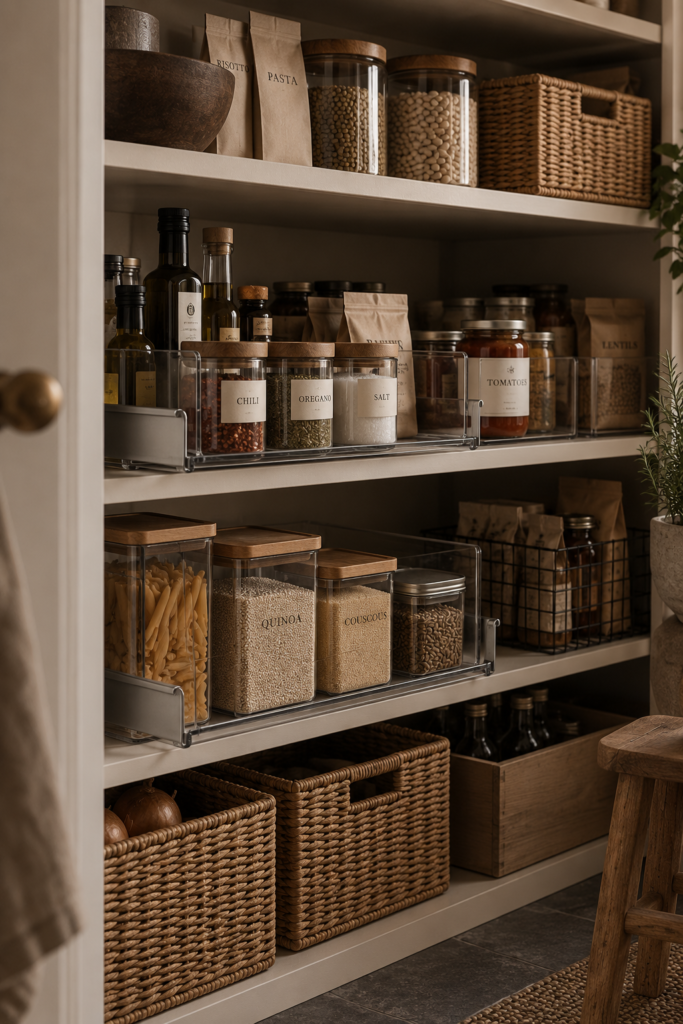
6. Use Shelf Risers to Create More Space
Tall pantry shelves often leave useful vertical space unused. Shelf risers create an extra level for cans, jars and smaller containers, making it easier to see what is stored at the back while increasing the usable space on each shelf.
Check the height above and below a riser with the actual jars or tins in place. It should sit securely and leave enough clearance to remove items without knocking the upper level.
Product Name
7. Make Corners Work Harder
Pantry corners can easily become awkward spaces where items get forgotten. Turntables and rotating organizers make it easier to reach jars, sauces and smaller ingredients without moving everything in front of them. They work especially well in deeper shelves and difficult corners.
Compare a turntable with a rectangular bin before buying. Circular storage can improve reach in a corner but may waste useful space on a narrow shelf.
Product Name
8. Store Backstock Separately
Keeping every duplicate product on the main pantry shelves can quickly make the space feel overcrowded. Create a separate area for backstock and use the main shelves for items that are currently in use. This keeps everyday storage simpler while still making extra supplies easy to find.
Check the backstock area before shopping and bring duplicates together. If extras repeatedly overflow, review how much you buy rather than adding another overflow basket.
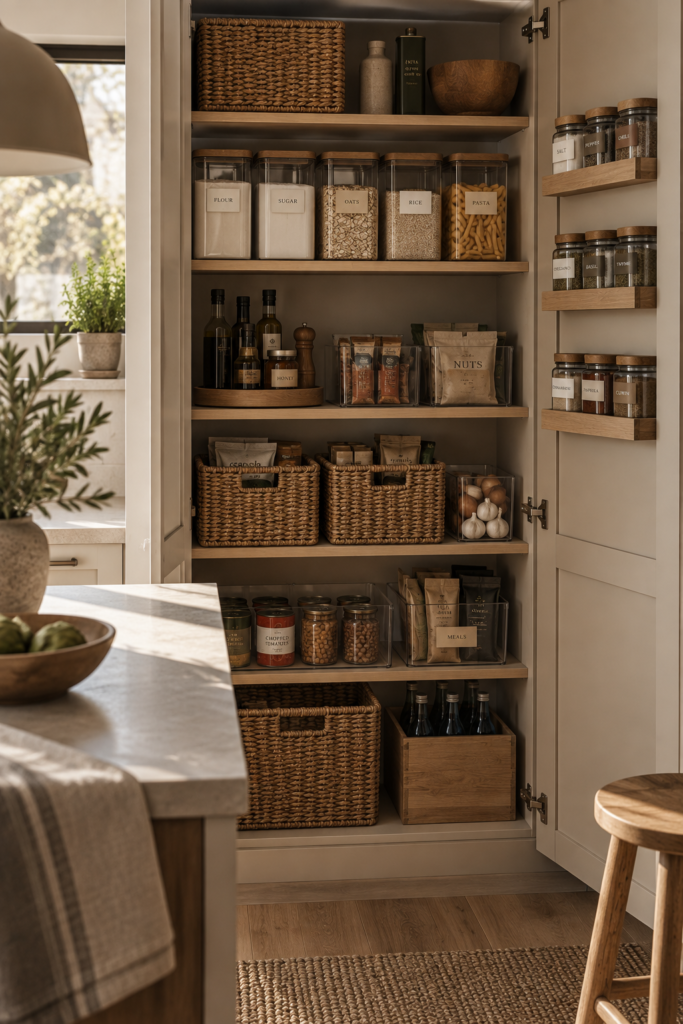
9. Label What Actually Needs a Label
Labels can make a pantry easier to navigate, but not every container needs one. Focus on foods that look similar or are stored outside their original packaging, such as flour, sugar and different types of grains. A simple labeling system keeps things clear without making the pantry feel over-organized.
Keep labels simple enough for everyone in the household to follow. When decanting, preserve the information needed to identify and use the food correctly; a decorative label alone may not be enough.
10. Add Pull-Out Storage Where It Makes Sense
Pull-out organizers can make lower shelves and deep pantry spaces much easier to use. Instead of reaching behind other items, the entire contents can be brought forward at once. They are particularly useful for bottles, jars and heavier pantry staples that are difficult to access at the back of a shelf.
Account for runners, hinges and the full extension of a pull-out unit. Follow the installation and load instructions, and check that the surrounding space stays clear when the drawer is open.
Product Name
11. Leave Some Empty Space
An organized pantry does not need to use every available centimetre. Leaving a little open space makes shelves easier to use, gives new groceries somewhere to go and prevents the pantry from immediately feeling overcrowded again. A system with room to change is often easier to maintain than one designed to fit perfectly.
Leave enough room to lift an item out and return it without rearranging the shelf. Test the layout after a grocery trip, when the pantry needs to hold more than it did during the tidy-up.
A Pantry That Stays Organized
The best pantry organization system is one that is easy to maintain. Start with the areas that cause the most frustration, give everyday items a clear place and introduce storage solutions only where they genuinely make the space easier to use.
Small changes can make a pantry feel calmer, more functional and much easier to keep organized over time.
Explore More Organization Ideas
Small Pantry Organization Ideas That Actually Save Space
13 Kitchen Organization Ideas for a Calmer, More Functional Space